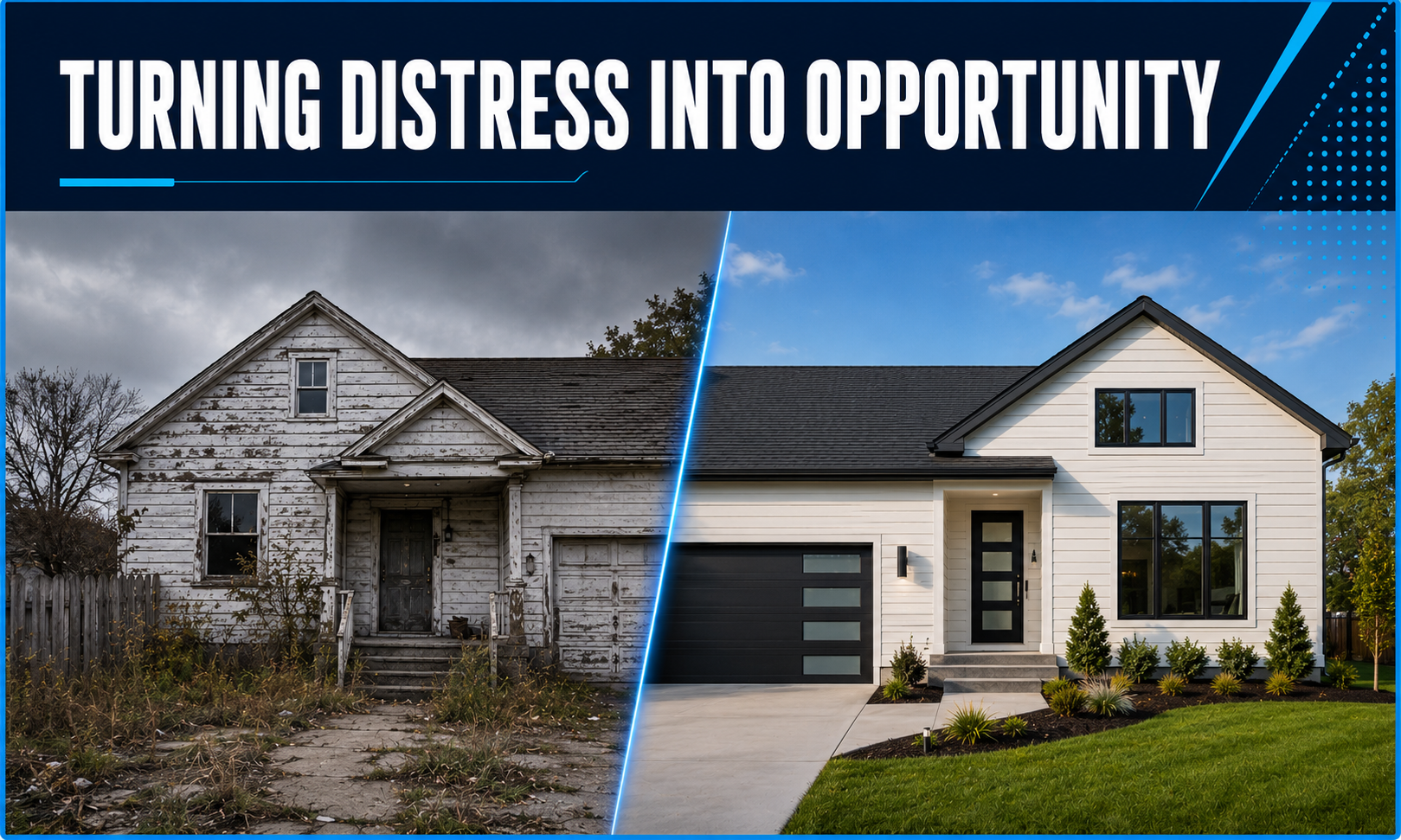
You’re staring at a property that could rent for $2,200 per month instead of $1,700. The difference? A $50,000 remodeling project. The kitchen needs updating, the bathrooms look dated, and the flooring shows years of tenant wear. You’ve got the capital—or at least access to it—but here’s the question that keeps you up at night: which improvements actually generate returns, and which just drain your bank account?
This isn’t a homeowner’s renovation decision. You’re not choosing between subway tile and arabesque because one matches your personal aesthetic. You’re making an investment decision that needs to generate measurable returns through higher rents, reduced vacancy periods, and increased property value. The stakes are different, the timeline matters more, and the decision-making framework requires a completely different mindset.
Most rental property owners approach remodeling with homeowner instincts—and that’s exactly where they go wrong. They over-improve for their market, choose high-maintenance materials that look impressive initially but cost a fortune over time, or time their improvements poorly and lose months of rental income. After reviewing thousands of investment property deals annually, we’ve seen the same mistakes repeated by otherwise savvy investors who simply apply the wrong decision-making framework to their rental properties.
The difference between profitable remodeling and expensive mistakes comes down to understanding tenant psychology, market positioning, and strategic timing. It’s about knowing that granite countertops might be expected in Class A rentals but represent over-improvement in Class C properties. It’s recognizing that luxury vinyl plank often outperforms hardwood in rental applications—not because it’s cheaper, but because it delivers better long-term value when you factor in durability and maintenance costs.
Here’s everything you need to know about income property remodeling: how to identify improvements that command rent premiums, when to time your renovations for maximum impact, how to finance an investment property, and most importantly, how to measure success so you can replicate what works across your portfolio. By the end, you’ll have a systematic framework for making remodeling decisions that generate returns rather than just creating nicer properties that don’t justify their costs.
Understanding the Investment Property Remodeling Mindset
The fundamental difference between homeowner renovations and investment property remodeling comes down to one word: returns. When you’re renovating your primary residence, you’re optimizing for personal preferences, lifestyle needs, and emotional satisfaction. When you’re remodeling a rental property, every dollar spent needs to generate measurable financial returns through increased rent, reduced vacancy, lower maintenance costs, or higher resale value.
This distinction sounds obvious, but it’s where most investors stumble. They walk into a dated rental property and immediately start thinking like homeowners: “I would never live here with these countertops” or “This bathroom is embarrassing.” Those thoughts lead to over-improvement decisions that look great but don’t generate proportional returns. The tenant willing to pay $1,700 per month doesn’t care about the same finishes that matter to someone buying a $500,000 home.
Investment property remodeling requires a completely different evaluation framework. You’re not asking “Would I want to live here?” You’re asking “What’s the minimum investment required to achieve maximum rent premium in this specific market?” That question forces you to research comparable rentals, understand tenant expectations for your property class, and identify the specific improvements that actually move the needle on rental rates.
Consider the psychology of rental tenants versus homebuyers. Homebuyers are making a long-term commitment and emotional investment. They scrutinize every detail because they’ll live with those choices for years. Rental tenants are making a shorter-term decision based primarily on location, price, and functionality. They care about clean, functional, and well-maintained spaces—but they’re not paying premium rents for designer touches that matter more to homeowners than renters.
This mindset shift affects every remodeling decision you make. It means choosing durable, low-maintenance materials over aesthetically impressive but high-maintenance options. It means understanding that a $15,000 kitchen remodel might generate the same rent premium as a $30,000 kitchen in your market. It means recognizing that some improvements—like converting a bedroom to a home office—might actually reduce your property’s appeal to the majority of renters.
The investment property remodeling mindset also requires thinking in portfolio terms rather than individual property terms. When you’re renovating your home, you’re making a one-time decision. When you’re building a rental portfolio, you’re developing systems and standards that can be replicated across multiple properties. This means establishing material specifications, contractor relationships, and renovation processes that deliver consistent results at predictable costs.
Most importantly, this mindset requires measuring everything. You need to track actual rent premiums achieved, vacancy reduction percentages, maintenance cost changes, and total return on investment for each improvement category. Without this data, you’re just guessing—and expensive guessing at that. The investors who succeed at rental property remodeling are the ones who treat it as a data-driven business decision rather than an aesthetic preference.
Identifying High-ROI Improvements for Rental Properties
Not all remodeling improvements generate equal returns in rental properties. Some upgrades command significant rent premiums while others barely move the needle. Understanding which improvements deliver the highest ROI in your specific market is the difference between profitable remodeling and expensive mistakes that never pay for themselves.
Kitchen and bathroom updates consistently rank as the highest-ROI improvements for rental properties, but the level of investment matters enormously. A complete kitchen gut renovation with custom cabinets and high-end appliances might cost $40,000 but only generate an additional $150 per month in rent—a 4.5% annual return that takes years to recoup. Meanwhile, a strategic $12,000 kitchen refresh with painted cabinets, new countertops, updated fixtures, and modern appliances might generate $125 per month in additional rent—a 12.5% annual return that pays for itself much faster.
The key is understanding the improvement threshold for your market. In Class C properties, tenants expect functional kitchens and bathrooms that are clean and updated, but they’re not paying premiums for granite countertops or subway tile backsplashes. In Class A properties, those finishes are expected—but over-improving beyond market standards still doesn’t generate proportional returns. Research your comparable rentals obsessively to understand exactly where that threshold sits.
Flooring represents another high-impact improvement category, but material selection makes all the difference. Luxury vinyl plank (LVP) has become the gold standard for rental properties because it delivers the aesthetic appeal of hardwood at a fraction of the cost, with superior durability and water resistance. It’s easier to maintain, simpler to repair, and holds up better to tenant wear than traditional hardwood—making it a better long-term investment even though it costs less upfront.
Curb appeal improvements often deliver outsized returns because they reduce vacancy periods and allow you to be more selective with tenant screening. Fresh exterior paint, updated landscaping, new front door hardware, and improved outdoor lighting can transform a property’s first impression for minimal investment. These improvements don’t just increase rent—they decrease the time your property sits vacant, which has a massive impact on annual returns.
Energy efficiency upgrades represent a special category because they generate returns through both rent premiums and reduced operating costs. LED lighting, programmable thermostats, improved insulation, and energy-efficient appliances reduce utility costs for tenants (making your property more attractive) while also reducing your costs if you cover any utilities. These improvements often pay for themselves through utility savings alone, with rent premiums as additional upside.
Storage additions and functional improvements frequently get overlooked but can command significant rent premiums in the right markets. Adding a washer/dryer hookup, creating additional closet space, or finishing a basement to add usable square footage can dramatically increase your property’s appeal and rental rate. These improvements address tenant pain points rather than aesthetic preferences—and tenants will pay for solutions to real problems.
Smart home features have emerged as a new category of high-ROI improvements, but selectivity matters. Basic features like smart locks (which simplify property access and eliminate key management) and smart thermostats (which reduce utility costs) deliver clear value. More advanced features like smart lighting or whole-home automation systems typically don’t generate proportional rent premiums in most rental markets—they’re over-improvements that appeal more to homeowners than renters.
The improvements that consistently deliver the lowest ROI are the ones driven by personal preference rather than market demand. Custom built-ins, high-end light fixtures, designer paint colors, and luxury finishes might make the property more appealing to you personally, but they rarely generate rent premiums that justify their costs. Every improvement decision should be validated against comparable rental data rather than personal aesthetic preferences.
Strategic Timing and Phasing of Rental Property Renovations
When you remodel matters almost as much as what you remodel. Poor timing can cost you months of rental income, force you to accept lower-quality tenants, or require you to break leases and pay relocation costs. Strategic investors approach renovation timing as a critical component of their overall investment strategy rather than an afterthought.
The ideal time to complete major renovations is between tenants during natural turnover periods. This seems obvious, but many investors fail to plan ahead and end up making reactive decisions when a tenant gives notice. Instead, you should be planning your renovation timeline 3-6 months before an expected vacancy, securing contractor bids, ordering materials, and scheduling work so renovations can begin immediately when the tenant moves out.
Lease timing significantly impacts your renovation strategy. If you have a tenant on a month-to-month lease or a lease expiring in 2-3 months, it might make sense to wait for natural turnover rather than breaking the lease and paying relocation costs. However, if you have a tenant locked in for another 18 months and your property is significantly under-market, the math might favor paying to break the lease, completing renovations, and capturing higher rents sooner.
Seasonal considerations affect both renovation costs and re-leasing timelines. In most markets, spring and early summer represent peak rental seasons when you can command higher rents and fill vacancies faster. Completing renovations in late winter or early spring positions you to capture this demand. Conversely, renovating during peak rental season means losing your best opportunity to lease at premium rates—unless the renovation is absolutely necessary to compete in your market.
Market conditions should influence your renovation timing and scope. In tight rental markets with low vacancy rates, you might be able to command rent premiums without extensive renovations—making it smarter to complete minimal updates and get the property back on the market quickly. In softer markets with higher vacancy, more extensive renovations might be necessary to differentiate your property and reduce vacancy periods.
Phased renovation strategies can help you balance cash flow concerns with improvement needs. Rather than completing all improvements at once, you might tackle high-impact, quick-payback improvements first (like painting and flooring), capture increased rents, then use that additional cash flow to fund more extensive improvements (like kitchen and bathroom updates) at the next turnover. This approach reduces upfront capital requirements and allows you to validate rent premiums before making larger investments.
Portfolio-level timing considerations become important as you scale. Staggering renovations across multiple properties helps you manage contractor relationships, maintain consistent cash flow, and avoid having multiple properties vacant simultaneously. It also allows you to test improvement strategies on one property before rolling them out across your entire portfolio—reducing the risk of expensive mistakes.
The biggest timing mistake investors make is rushing renovations to minimize vacancy periods, then cutting corners or accepting substandard work that creates maintenance problems and tenant dissatisfaction. A property that sits vacant for an extra two weeks while you complete quality work will generate better long-term returns than a property you rush to market with obvious defects that lead to tenant complaints, early turnover, or negative reviews.
Financing Rental Property Renovations Without Destroying Cash Flow
How you finance renovations can make the difference between a profitable improvement and a cash flow disaster. Most investors focus exclusively on the cost of improvements without adequately considering the financing structure and its impact on their overall investment returns. The right financing strategy depends on your specific situation, property type, and investment timeline.
Cash financing offers the simplest approach and eliminates interest costs, but it ties up capital that could be deployed across multiple properties or held as reserves for unexpected expenses. For investors with limited capital, using cash for renovations might mean passing on additional acquisition opportunities or leaving yourself without adequate reserves—both of which can be more costly than the interest you’d pay on financing.
Home equity lines of credit (HELOCs) on your primary residence or other properties provide flexible, relatively low-cost financing for renovations. You can draw funds as needed, only pay interest on the amount borrowed, and typically secure better rates than hard money or credit cards. However, using heloc for investment property renovations does put your primary residence or other properties at risk if the renovation doesn’t generate expected returns.
Hard money rehab loans are specifically designed for investment property renovations and offer several advantages over traditional financing. They provide quick access to capital, don’t require extensive documentation, and often include built-in renovation budgets with funds released as work is completed. The higher interest rates are offset by the speed and flexibility—allowing you to move quickly on opportunities and complete renovations faster than traditional financing would allow.
Cash-out refinancing can work well for properties you’ve owned for several years that have appreciated or been paid down significantly. You can pull equity out at relatively low rates and use it to fund renovations across your portfolio. The challenge is that refinancing resets your loan term and increases your monthly payment, which needs to be factored into your cash flow projections.
Credit cards and personal loans represent the most expensive financing options and should generally be avoided for large renovations. However, they can work for smaller improvements or when you need to bridge a short-term gap between renovation completion and refinancing. The key is having a clear plan to pay off high-interest debt quickly rather than carrying it long-term.
Partnership financing—bringing in a capital partner who funds renovations in exchange for equity or profit share—can work well for investors with deal flow but limited capital. This approach preserves your cash for acquisitions while allowing you to complete value-add renovations. The tradeoff is sharing profits and potentially giving up some control over renovation decisions.
The financing structure you choose should align with your renovation timeline and expected returns. Quick cosmetic updates that will generate immediate rent increases might justify higher-cost, short-term financing that you can pay off quickly with increased cash flow. More extensive renovations with longer payback periods typically require lower-cost, longer-term financing to maintain positive cash flow during the improvement period.
Cash flow modeling is critical before committing to any financing structure. You need to project not just the renovation costs and expected rent increases, but also the carrying costs during renovation, financing costs, and the impact on your monthly cash flow once the property is re-leased. Many investors focus on the total ROI without adequately considering whether they can sustain the monthly cash flow impact during the improvement period.
Measuring Success and Optimizing Your Renovation Strategy
The difference between investors who consistently profit from renovations and those who lose money comes down to measurement and optimization. Without systematic tracking of renovation costs, rent premiums achieved, and total returns, you’re operating on gut feel rather than data—and gut feel is expensive in real estate investing.
Start by establishing baseline metrics before any renovation begins. Document current rent, vacancy rates, maintenance costs, and tenant quality. Take detailed photos and videos of the property condition. This baseline allows you to measure the actual impact of your improvements rather than relying on assumptions about what worked.
Track renovation costs in detail, breaking them down by category (kitchen, bathrooms, flooring, etc.) and by type (materials, labor, permits, etc.). This granular tracking allows you to identify which improvements deliver the best returns and where you might be overspending. Many investors track total renovation costs but can’t tell you whether their kitchen update or bathroom refresh generated better ROI—making it impossible to optimize future decisions.
Measure rent premiums achieved against comparable properties rather than just comparing to your previous rent. The goal isn’t just to increase rent—it’s to achieve market-rate rent for your property’s improved condition. If you spend $30,000 on renovations and increase rent by $200 per month, that looks like an 8% return. But if comparable renovated properties in your area rent for $300 more than unrenovated units, you’ve left money on the table despite achieving a rent increase.
Vacancy reduction represents another critical metric that often gets overlooked. If your renovations reduce average vacancy from 8% to 4% annually, that’s worth $1,680 per year on a property renting for $1,750 per month—equivalent to a $96 monthly rent increase. These vacancy reductions should be factored into your total ROI calculations alongside direct rent premiums.
Maintenance cost changes provide important feedback on material and improvement choices. If your luxury vinyl plank flooring reduces maintenance calls and costs compared to the carpet it replaced, that ongoing savings should be factored into your ROI calculations. Conversely, if your high-end appliances require more frequent service calls than basic models, that increased cost reduces your actual returns.
Tenant quality improvements can be harder to quantify but significantly impact long-term returns. If your renovations allow you to attract tenants with better credit, longer tenancy periods, and fewer issues, that reduces turnover costs, legal expenses, and management headaches. Track metrics like average tenant credit scores, lease renewal rates, and eviction rates to measure these qualitative improvements.
Portfolio-level analysis becomes important as you complete multiple renovations. Look for patterns in which improvements consistently deliver the best returns across different properties and markets. You might discover that bathroom updates generate better ROI than kitchen updates in your Class B properties, or that exterior improvements reduce vacancy more effectively than interior upgrades in certain neighborhoods.
Use your renovation data to develop standardized specifications and budgets for future projects. Once you know that a specific scope of kitchen renovation consistently costs $12,000-14,000 and generates $125-150 in monthly rent premiums, you can quickly evaluate whether similar improvements make sense on new acquisitions. This systematization allows you to scale your renovation strategy across multiple properties with predictable results.
The most successful investors treat renovation strategy as an ongoing optimization process rather than a one-time decision. They continuously test new approaches, measure results, and refine their standards based on actual performance data. They’re not afraid to abandon improvements that don’t generate expected returns or to invest more heavily in categories that consistently outperform.
Common Renovation Mistakes That Destroy Returns
Even experienced investors make costly renovation mistakes that significantly reduce their returns. Understanding these common pitfalls helps you avoid expensive errors and make better improvement decisions across your portfolio.
Over-improvement for the market represents the single most expensive mistake in rental property renovation. This happens when investors apply Class A finishes to Class C properties, install high-end materials that tenants don’t value, or renovate beyond what comparable properties offer. The result is spending $40,000 to achieve rent premiums that a $20,000 renovation would have generated—destroying returns and extending payback periods unnecessarily.
Under-improvement creates the opposite problem but can be equally costly. Investors who try to minimize renovation costs by cutting corners, using cheap materials, or skipping necessary improvements often end up with properties that don’t command market rents, sit vacant longer, or require frequent maintenance. The $5,000 you save by using builder-grade materials might cost you $150 per month in lost rent—a terrible tradeoff that compounds over time.
Poor contractor selection and management leads to cost overruns, timeline delays, and substandard work that requires expensive corrections. Investors who choose contractors based solely on price rather than quality, who fail to get detailed written bids, or who don’t maintain adequate oversight during construction frequently end up spending more than they budgeted while achieving worse results. The cheapest contractor is rarely the best value.
Ignoring permit requirements seems like a way to save money and time, but it creates significant risks. Unpermitted work can complicate future sales, create liability issues if problems arise, result in expensive fines, or require costly corrections to bring work up to code. The few hundred dollars you save by skipping permits can turn into thousands in remediation costs if you’re caught or if the work causes problems.
Failing to account for carrying costs during renovation destroys returns for many investors. They calculate ROI based on renovation costs and rent increases but forget to factor in the months of lost rental income during construction, the ongoing mortgage and insurance payments, and the utilities and maintenance costs for vacant properties. A renovation that looks profitable on paper might actually lose money when you include all carrying costs.
Choosing high-maintenance materials and finishes creates ongoing costs that reduce long-term returns. That beautiful but delicate tile backsplash, the hardwood floors that scratch easily, or the white cabinets that show every mark might look impressive initially but generate constant maintenance calls and tenant complaints. Durability and ease of maintenance should be primary considerations for rental property materials—not just initial appearance.
Renovation scope creep happens when investors start with a defined budget and scope but continuously add improvements during construction. “While we’re here, we might as well…” becomes an expensive phrase that turns a $15,000 renovation into a $30,000 project without proportional increases in rent or value. Stick to your planned scope unless you discover issues that absolutely must be addressed.
Ignoring market feedback represents a critical mistake that prevents improvement over time. Investors who complete renovations but never analyze whether they achieved expected returns, who don’t track which improvements generated the best ROI, or who fail to adjust their strategy based on results keep making the same expensive mistakes across multiple properties. Every renovation should generate data that improves your future decisions.
Building Systems for Scalable Renovation Success
As your portfolio grows, ad hoc renovation approaches become unsustainable. Successful investors develop systematic processes that allow them to complete renovations efficiently across multiple properties while maintaining quality and controlling costs. These systems transform renovation from a stressful, unpredictable process into a repeatable business operation.
Standardized specifications represent the foundation of scalable renovation systems. Rather than making custom decisions for each property, develop standard material specifications, finish packages, and improvement scopes for different property classes. This might mean establishing that all Class B properties receive LVP flooring in a specific color range, white shaker cabinets, quartz countertops in neutral colors, and stainless appliances. These standards simplify decision-making, improve contractor efficiency, and allow you to negotiate better pricing through volume purchasing.
Contractor relationships become increasingly valuable as you scale. Rather than finding new contractors for each project, develop ongoing relationships with reliable contractors who understand your standards, pricing expectations, and timeline requirements. These relationships allow you to move faster on new projects, negotiate better pricing, and maintain consistent quality across your portfolio. The best contractors will prioritize your work when they know you have ongoing projects rather than one-off jobs.
Renovation checklists and processes ensure nothing gets overlooked and work proceeds efficiently. Develop detailed checklists that cover everything from initial property assessment through final inspection, including permit requirements, material ordering, contractor scheduling, and quality control checkpoints. These checklists allow you to delegate renovation management while maintaining oversight and ensuring consistent results.
Budget templates based on your historical data allow you to quickly and accurately estimate renovation costs for new properties. Rather than starting from scratch with each estimate, use templates that reflect your actual costs for different improvement categories. These templates should include not just material and labor costs but also permits, carrying costs, and contingency budgets based on your experience with similar projects.
Vendor relationships for materials and supplies can significantly reduce costs as you scale. Establishing accounts with flooring suppliers, cabinet manufacturers, appliance retailers, and other vendors allows you to negotiate volume pricing, streamline ordering, and maintain consistent material quality. Some investors even establish relationships with wholesalers or manufacturers to access better pricing than retail channels offer.
Project management systems help you track multiple renovations simultaneously without losing control of timelines, budgets, or quality. Whether you use specialized construction management software or simple spreadsheets, having a system to monitor progress, track spending, and identify issues early becomes critical when you’re managing renovations across multiple properties. These systems also generate the data you need to continuously improve your processes.
Quality control processes ensure that work meets your standards before you pay contractors and release properties to tenants. Develop inspection checklists that cover all aspects of the renovation, from structural work through final finishes. Many investors use a three-stage inspection process: rough inspection during construction, pre-final inspection before contractor completion, and final inspection before tenant move-in. This staged approach catches issues early when they’re easier and cheaper to correct.
The goal of these systems isn’t to make renovation mechanical or to eliminate all customization—it’s to handle the routine 80% of decisions systematically so you can focus your attention on the 20% that requires judgment and expertise. Well-designed systems actually increase your flexibility by freeing up mental bandwidth and allowing you to move faster on opportunities.
Taking Action on Your Next Renovation Project
Understanding renovation strategy is valuable, but execution is what generates returns. The difference between investors who profit from renovations and those who lose money comes down to taking systematic action based on data rather than assumptions. Here’s how to apply these principles to your next project.
Start with thorough market research before making any renovation decisions. Spend time analyzing comparable rentals in your area, noting which features command rent premiums and which don’t. Visit properties if possible, review online listings in detail, and talk to property managers about what tenants actually value. This research should drive your renovation scope rather than personal preferences or generic advice.
Develop a detailed renovation budget that includes not just improvement costs but also carrying costs, financing costs, and contingency reserves. Most investors underestimate total costs by 20-30% because they focus only on materials and labor while ignoring permits, utilities during vacancy, mortgage payments, and unexpected issues. Build in a 15-20% contingency budget for unexpected problems—you’ll almost always need it.
Get multiple contractor bids for any significant work, but don’t automatically choose the lowest price. Evaluate contractors based on their experience with rental properties, references from other investors, timeline commitments, and overall professionalism. The contractor who comes in 20% cheaper but takes twice as long or does substandard work will cost you more in the long run through lost rent and correction costs.
Create a detailed timeline that accounts for all phases of the renovation, from planning and permitting through final inspection and re-leasing. Build in buffer time for unexpected delays—they’re almost inevitable in renovation projects. This timeline should include specific milestones and decision points so you can track progress and identify problems early.
Document everything throughout the renovation process. Take before, during, and after photos. Track all costs in detail. Note what works well and what doesn’t. This documentation serves multiple purposes: it helps you measure actual returns, provides valuable data for future projects, creates records for tax purposes, and gives you marketing materials for re-leasing the property.
Measure results systematically after renovation completion. Track the actual rent achieved versus projections, vacancy period versus expectations, and total costs versus budget. Calculate your actual ROI including all costs and compare it to your projections. This analysis is what allows you to improve your renovation strategy over time rather than repeating the same mistakes.
Use your renovation experience to refine your systems and standards for future projects. If certain improvements consistently deliver better returns, make them standard across your portfolio. If specific contractors prove reliable, develop ongoing relationships with them. If particular materials perform well, specify them for future renovations. Each project should make your next one easier, faster, and more profitable.
The investors who build wealth through rental properties aren’t the ones who complete the most expensive renovations or create the most impressive properties—they’re the ones who systematically identify high-ROI improvements, execute them efficiently, and continuously optimize their approach based on actual results. That’s the difference between renovation as an expense and renovation as a wealth-building strategy.
Apply today to get fast, reliable funding for your next real estate project.