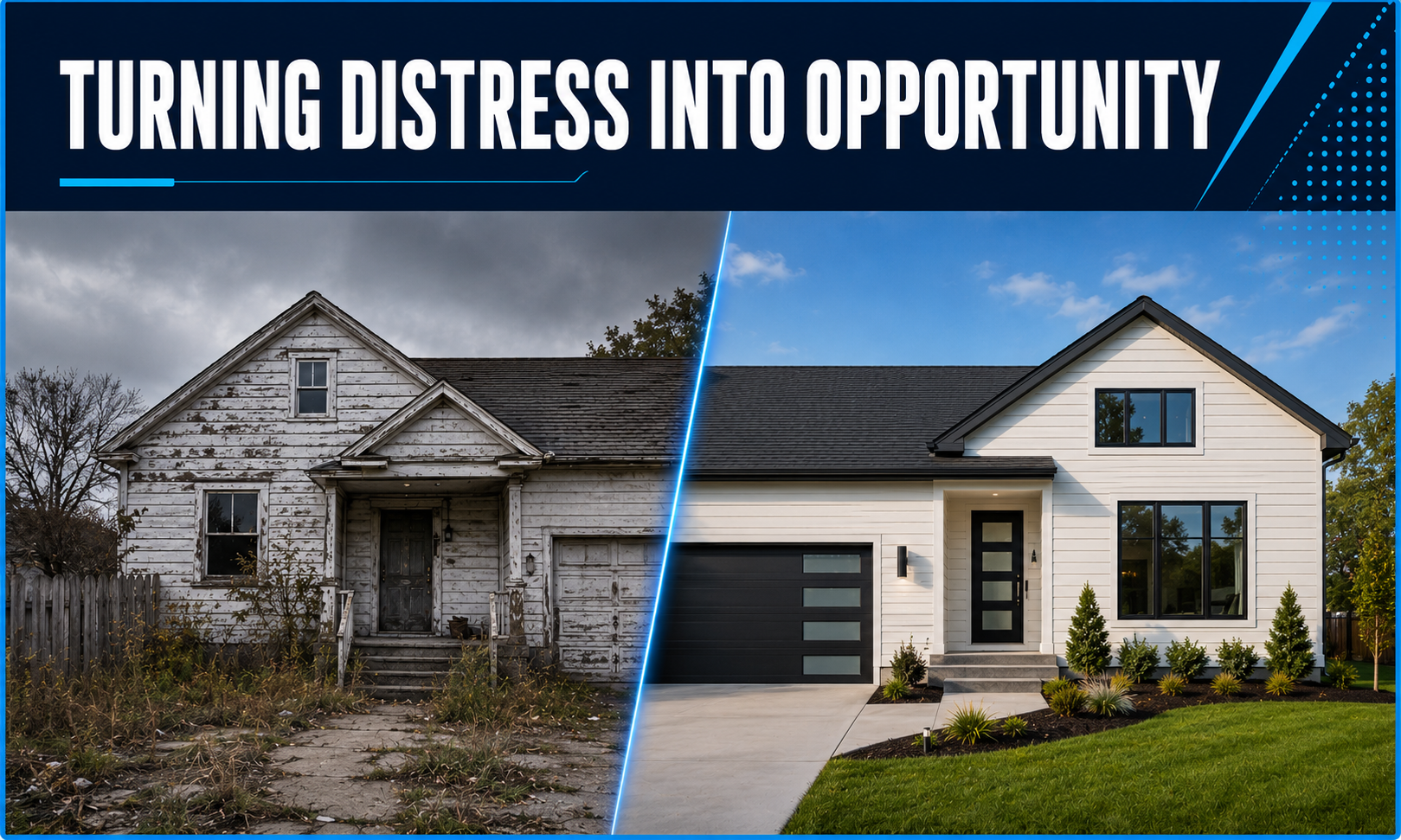
You’re staring at your bank statement, and the numbers tell a frustrating story. Between your $2,200 monthly rent and the $1,650 mortgage payment on your flip property across town, you’re bleeding $3,850 every month just to keep a roof over your head while trying to build wealth through real estate. The renovation is taking longer than expected, your contractor keeps finding “surprises” behind the walls, and every extra week means another chunk of profit disappearing into dual housing costs.
This is the double-cost trap that quietly destroys the margins on countless fix-and-flip projects.
Most investors accept this burden as the price of doing business. They calculate their renovation budgets, estimate their after-repair values, and project their profits—but they rarely account for the silent killer: paying for two places to live while their money sits locked in a property that isn’t generating income yet.
What if you could eliminate one of those expenses entirely?
The live in flip strategy flips this equation on its head. Instead of carrying dual housing costs, you move into the property you’re renovating, transforming your biggest monthly expense into your investment vehicle. Your housing payment isn’t disappearing into someone else’s pocket—it’s building equity in a property you’re actively improving. The $2,200 you were spending on rent? That’s now $26,400 annually that stays in your investment instead of vanishing forever.
But the financial advantages go far beyond eliminating rent payments.
Live-in flipping unlocks access to owner-occupant financing with down payments as low as 3-5% instead of the 20-25% required for investment properties. You’ll secure better interest rates, more favorable loan terms, and—here’s the game-changer—potential tax-free profits up to $250,000 for single filers or $500,000 for married couples when you sell. Traditional flips get hammered with capital gains taxes and depreciation recapture. Your primary residence? The IRS lets you keep significantly more of what you earn.
The strategy isn’t without challenges. You’ll be living through construction dust, managing contractor schedules around your daily routine, and making renovation decisions that balance immediate livability with long-term profitability. But for investors willing to embrace temporary inconvenience, the financial rewards can be extraordinary.
Here’s everything you need to know about the live in flip strategy that’s transforming how smart investors approach house flipping—from securing the right financing and selecting properties that work for both living and profit, to executing renovations while maintaining your sanity, to timing your exit for maximum tax advantages. Whether you’re a first-time investor looking to break into real estate or an experienced flipper tired of watching housing costs eat your margins, this approach offers a proven path to building wealth while cutting your living expenses to zero.
At The Hard Money Co., we’ve funded hundreds of real estate projects and reviewed thousands of deals annually. We’ve seen firsthand how live-in flipping creates opportunities for investors who might otherwise struggle with the capital requirements and carrying costs of traditional fix-and-flip strategies. The investors who succeed with this approach understand that temporary inconvenience translates into permanent financial advantage—and they’re willing to make that trade.
Decoding the Live In Flip Strategy: Your Primary Residence Profit Machine
A live in flip strategy means purchasing a fixer-upper property as your primary residence, living in it while you renovate, and then selling or refinancing after the improvements are complete. This isn’t a traditional investment property where you maintain separate housing—you’re making this property your actual home throughout the renovation process.
The distinction matters more than you might think.
When you classify a property as your primary residence rather than an investment, you unlock a completely different set of financial advantages. Owner-occupant loans require down payments as low as 3-5% compared to the 20-25% typically required for investment properties. That’s the difference between needing $10,000 versus $50,000 to purchase a $200,000 property—a gap that determines whether most investors can even start their first project.
The Primary Residence Advantage
The legal classification as owner-occupied creates immediate financial benefits that compound throughout your project. Lenders view primary residences as lower risk because you have personal stake in maintaining the property—you’re living there, after all. This translates to interest rates that can be a full percentage point or more below investment property rates.
On a $200,000 mortgage, that single percentage point difference saves you roughly $2,000 annually in interest payments. Over a two-year live-in flip timeline, you’re keeping an extra $4,000 that would otherwise disappear into financing costs.
Beyond financing advantages, primary residence classification provides access to conventional loan products with more flexible terms. You’re not limited to the stricter requirements and higher rates that come with investment property financing. This opens doors to FHA 203(k) renovation loans, Fannie Mae HomeStyle loans, and other products specifically designed for owner-occupants improving their homes.
Timeline and Renovation Framework
The typical live in flip follows a 12-24 month timeline from purchase to exit, though the sweet spot for tax benefits is the two-year mark. This isn’t a rushed three-month flip where you’re racing to minimize holding costs—you’re strategically balancing renovation progress with comfortable living conditions.
Smart investors approach renovations in phases that prioritize livability alongside profit. Essential systems come first: HVAC, plumbing, electrical, and structural issues that affect safety and comfort. You can’t live comfortably in a house with a failing furnace or questionable electrical, regardless of how beautiful the kitchen might eventually become.
Once the critical systems are addressed, you move into aesthetic and value-add improvements—kitchens, bathrooms, flooring, and finishes that drive resale value. This phased approach means you’re never living in complete chaos. You establish a functional base camp within the property, then systematically improve sections while maintaining livable space throughout the process.
The exit strategy timing is crucial for maximizing returns. Live in the property as your primary residence for at least two years, and you qualify for the Section 121 capital gains exclusion—up to $250,000 tax-free for single filers or $500,000 for married couples filing jointly. Rush the timeline and sell before hitting that two-year mark? You’ll pay capital gains taxes just like any other investment property, potentially surrendering 15-20% of your profit to the IRS.
This is where patience transforms into profit.
The Financial Powerhouse Behind Live In Flip Success
The numbers behind live-in flipping reveal why this strategy has quietly become the secret weapon for investors who understand real estate math. While traditional flippers juggle dual housing costs and investment property expenses, live-in flippers eliminate an entire category of monthly obligations—transforming what was pure expense into equity-building investment.
Let’s break down exactly how this financial advantage compounds across multiple profit centers.
Eliminating the Double-Cost Trap
Traditional real estate investors face a brutal reality: they’re paying for housing twice. Your personal rent or mortgage continues regardless of your investment activities, while your flip property generates zero income during renovation. That’s $2,000 to $3,000 monthly disappearing into separate housing costs—money that could be building equity or funding additional improvements.
The live-in flip collapses this dual expense into a single payment. Your mortgage becomes your only housing cost, and every dollar you pay builds equity in the property you’re improving. For an investor spending $2,200 on rent, moving into their flip property saves $26,400 annually—money that either stays in your pocket or gets reinvested into higher-quality renovations that drive resale value.
This isn’t theoretical savings. It’s cash flow that transforms project economics. A traditional flipper might budget $30,000 for a kitchen renovation while paying $2,200 monthly rent. The live-in flipper can allocate that same $30,000 to the kitchen while their housing payment builds equity. Over 18 months, that’s $39,600 in rent savings that either increases profit margins or funds additional improvements that boost the after-repair value.
Owner-Occupant Financing Advantages
The financing benefits of primary residence classification extend far beyond lower down payments. Interest rates on owner-occupied properties typically run 0.5-1.0% below investment property rates—a difference that compounds dramatically over the life of your loan.
Consider a $200,000 mortgage at 7% versus 8%. The 7% owner-occupied rate creates a monthly payment of $1,331, while the 8% investment rate pushes that to $1,468. That’s $137 monthly or $1,644 annually in interest savings. Over a two-year hold period, you’re keeping an extra $3,288 that would otherwise go to the lender.
But the real advantage lies in loan-to-value ratios and product access. Owner-occupied financing allows you to borrow up to 97% of the purchase price with conventional loans, or even 96.5% with FHA financing. Investment properties cap out at 75-80% LTV, requiring substantially more cash upfront. This difference determines whether you can execute the deal at all—especially for newer investors without deep capital reserves.
The BRRRR method shares similar financing advantages when you convert properties to rentals, but live-in flips offer even more favorable terms during the initial purchase and renovation phase. You’re accessing primary residence rates from day one, not waiting until after the refinance to capture better terms.
Tax Benefits That Multiply Your Returns
The Section 121 capital gains exclusion represents the most powerful tax advantage in residential real estate. Live in a property as your primary residence for at least two of the previous five years, and you can exclude up to $250,000 in gains as a single filer or $500,000 as a married couple filing jointly.
This isn’t a deduction or a credit—it’s complete exclusion from taxable income.
A traditional flipper who purchases a property for $200,000, invests $75,000 in renovations, and sells for $350,000 faces capital gains taxes on the $75,000 profit. At a 20% effective rate (15% federal capital gains plus 5% state), that’s $15,000 surrendered to tax authorities. The live-in flipper who meets the two-year residency requirement? They keep the entire $75,000.
The tax savings scale with your profit. On a $100,000 gain, you’re saving $20,000 in taxes. On a $150,000 gain, you’re saving $30,000. These aren’t marginal improvements—they’re transformational differences that can fund your next project or accelerate your path to financial independence.
Beyond capital gains exclusion, you may also deduct mortgage interest and property taxes during your occupancy period, reducing your annual tax burden while you live in and improve the property. Traditional flippers can’t deduct these expenses unless they convert the property to a rental—and even then, they face depreciation recapture when they eventually sell.
Reduced Carrying Costs and Holding Expenses
Traditional flippers obsess over timeline compression because every month of ownership costs money. Property taxes, insurance, utilities, HOA fees, and loan interest accumulate relentlessly while the property sits vacant during renovation. A six-month project might incur $12,000-$18,000 in carrying costs before the property ever hits the market.
Live-in flippers face the same expenses, but with a critical difference: you’re paying these costs anyway as part of your normal housing budget. The property taxes and insurance you’d pay on your primary residence simply shift to the property you’re improving. Utilities you’d consume in an apartment now power the house you’re renovating. The psychological and financial burden of “dead” carrying costs disappears because these expenses serve dual purposes—housing you while building equity.
This advantage extends your viable timeline without destroying profitability. Traditional flippers might rush a renovation to minimize six months of carrying costs, potentially compromising quality or missing opportunities for higher-value improvements. Live-in flippers can take 18-24 months to execute thoughtful, high-quality renovations because the extended timeline doesn’t generate additional costs beyond what they’d pay for housing anyway.
The result? Better renovation decisions, higher-quality finishes, and ultimately stronger resale values that more than compensate for the extended timeline. You’re not racing against a ticking clock of mounting expenses—you’re methodically building value while living rent-free.
Financing Your Live In Flip: Loans and Lending Options
Securing the right financing separates successful live-in flips from projects that drain your capital before they generate returns. The owner-occupied classification opens doors to loan products unavailable to traditional investors, but understanding which option fits your situation requires analyzing your financial position, renovation scope, and timeline.
Here’s how to navigate the financing landscape and structure deals that maximize your leverage while minimizing your cash requirements.
Conventional Loans with Low Down Payments
Conventional conforming loans represent the most accessible financing for live-in flips, offering down payments as low as 3% for first-time homebuyers or 5% for repeat buyers. These loans follow Fannie Mae and Freddie Mac guidelines, providing competitive interest rates and straightforward qualification requirements based on income, credit score, and debt-to-income ratios.
The 3-5% down payment advantage cannot be overstated. On a $200,000 property, you’re bringing $6,000-$10,000 to closing instead of the $40,000-$50,000 required for investment property financing. This capital efficiency allows you to preserve cash for renovations—the actual value-creation component of your project.
But conventional loans come with limitations for properties requiring substantial work. The property must meet minimum habitability standards at closing, meaning major systems (HVAC, plumbing, electrical, roof) need to be functional. You can’t purchase a property with a collapsed roof or non-functional plumbing using standard conventional financing—the lender won’t approve the loan until these issues are addressed.
For properties in good structural condition requiring primarily cosmetic updates, conventional loans offer unbeatable terms. You’re accessing the lowest interest rates available in residential lending while minimizing your upfront capital commitment. The challenge lies in finding properties that meet lender habitability requirements while still offering sufficient profit potential to justify the project.
FHA 203(k) Renovation Loans
The FHA 203(k) program solves the habitability problem by combining purchase financing with renovation funding in a single loan. You can buy a property that doesn’t meet conventional lending standards and finance the repairs needed to bring it up to code—all with a down payment as low as 3.5%.
This program comes in two versions: the Standard 203(k) for major renovations exceeding $35,000, and the Limited 203(k) for smaller projects under $35,000. The Standard version allows structural repairs, additions, and major system replacements. The Limited version covers cosmetic updates, appliance replacement, and minor repairs that don’t require architectural plans or extensive contractor oversight.
The Standard 203(k) requires working with FHA-approved contractors and consultants who manage the draw process and ensure work meets code requirements. You’ll submit detailed renovation plans, receive approval before starting work, and draw funds in stages as contractors complete specific milestones. This oversight protects the lender but adds complexity and timeline to your project.
For live-in flippers tackling properties with serious deferred maintenance or structural issues, the 203(k) program provides access to capital that would otherwise require either cash reserves or expensive hard money financing. The trade-off is administrative complexity and contractor requirements that limit your flexibility in managing the renovation process.
Fannie Mae HomeStyle Renovation Loans
The HomeStyle renovation loan operates similarly to the FHA 203(k) but with more flexibility and fewer restrictions. You can finance up to 75% of the after-repair value (ARV) with a minimum 5% down payment, allowing you to borrow against the future value you’ll create through renovations.
This ARV-based lending is powerful for live-in flippers. If you purchase a property for $200,000 and plan $75,000 in renovations that will create a $325,000 ARV, you can potentially borrow up to $243,750 (75% of ARV). With your $10,000 down payment (5% of purchase price), you’re financing both the acquisition and most of the renovation costs without bringing significant additional capital to the table.
HomeStyle loans don’t require FHA-approved contractors, giving you more control over who performs the work and how the project is managed. You’ll still work with a consultant who reviews plans and approves draw requests, but the process is generally more streamlined than the Standard 203(k) program.
The interest rates on HomeStyle loans typically match conventional mortgage rates, making them significantly cheaper than hard money fix and flip loans while providing similar renovation funding capabilities. For investors with strong credit and stable income who can navigate the documentation requirements, HomeStyle loans offer exceptional value.
Hard Money and Bridge Financing
When you need speed, flexibility, or can’t qualify for conventional financing, hard money loans provide capital based primarily on the property’s value rather than your personal financial profile. These loans close in days instead of weeks, require minimal documentation, and fund properties in any condition—including those that would never qualify for conventional or FHA financing.
The trade-off is cost. Hard money loans typically carry interest rates of 8-12% with points ranging from 2-4% of the loan amount. On a $200,000 loan, you might pay $16,000-$24,000 annually in interest plus $4,000-$8,000 in upfront points. These costs eat into your profit margins, but they provide access to deals that wouldn’t otherwise be possible.
For live-in flippers, hard money makes sense in specific scenarios: properties requiring extensive work that disqualify them from conventional financing, situations where you need to close quickly to secure a deal, or cases where your personal financial situation doesn’t meet conventional lending requirements. The strategy is to use hard money for acquisition and initial renovations, then refinance into conventional owner-occupied financing once the property is habitable and you’ve established residency.
This refinance approach captures the speed and flexibility of hard money while ultimately securing the lower rates and better terms of conventional financing. You’re paying higher costs for a short period to access deals with exceptional profit potential, then transitioning to sustainable long-term financing that supports your two-year residency requirement.
Structuring Your Financing Strategy
The optimal financing approach depends on your specific situation, but successful live-in flippers typically follow a decision framework based on property condition and personal qualifications.
For properties in good condition requiring primarily cosmetic work: conventional loans with 3-5% down provide the best combination of low cost and minimal capital requirements. You’re accessing the cheapest money available while preserving cash for renovations and reserves.
For properties needing moderate repairs but structurally sound: FHA 203(k) Limited or Fannie Mae HomeStyle loans allow you to finance both acquisition and renovation with minimal down payment. The additional complexity is justified by the capital efficiency and ability to tackle properties with more significant upside potential.
For properties requiring major structural work or systems replacement: FHA 203(k) Standard or hard money with a refinance strategy provides access to capital for extensive renovations. You’re accepting higher costs or more complexity in exchange for the ability to tackle properties with substantial profit potential that other buyers can’t finance.
The key insight most investors miss? Your financing strategy should match your renovation scope and timeline, not just your immediate capital constraints. Choosing the cheapest financing for a property that requires extensive work sets you up for failure when you can’t fund necessary repairs. Conversely, using expensive hard money for a property that qualifies for conventional financing unnecessarily sacrifices profit to convenience.
Property Selection: Finding Your Perfect Live In Flip Candidate
The property you choose determines whether your live-in flip generates substantial profit or becomes an expensive lesson in poor selection. Unlike traditional flips where you can walk away from a property after completion, you’re committing to live in this house for 12-24 months. That dual requirement—profitable investment and comfortable living space—demands a more nuanced evaluation process than standard fix-and-flip analysis.
Here’s how to identify properties that satisfy both criteria while maximizing your return potential.
The Livability-Profitability Balance
Every live-in flip candidate must pass two distinct tests: can you live here comfortably during renovations, and does the deal generate sufficient profit to justify the effort? These requirements often conflict, creating tension between properties that are easy to live in (but offer limited upside) and properties with massive profit potential (but require living through construction chaos).
The sweet spot lies in properties with functional core systems but outdated finishes. You want a house where the HVAC works, the plumbing doesn’t leak, the electrical meets code, and the roof keeps water out—but the kitchen is stuck in 1985, the bathrooms feature pink tile and brass fixtures, and the carpet should have been replaced a decade ago. These properties allow you to establish comfortable living quarters immediately while tackling the cosmetic improvements that drive resale value.
Avoid properties requiring immediate major systems work unless you have alternative housing during initial renovations. Living without heat in January or functional plumbing isn’t just uncomfortable—it’s potentially dangerous and will undermine your ability to execute quality renovations. If the property needs a new roof, HVAC replacement, or electrical panel upgrade, plan to complete this work before moving in or ensure you have temporary housing during the critical repair period.
Location and Market Fundamentals
Location drives both your living experience and your exit value. You’re not just buying a house to flip—you’re choosing where you’ll live for the next two years. That neighborhood better offer reasonable proximity to your work, acceptable schools if you have children, and a community environment you can tolerate daily.
But personal comfort can’t override market fundamentals. The property must be located in an area with strong comparable sales, consistent buyer demand, and price appreciation that supports your target exit value. A house in a declining neighborhood might be comfortable to live in, but if comparable sales are trending downward, you’re fighting market forces that will cap your profit regardless of renovation quality.
Research recent sales of renovated properties in the target neighborhood. What are buyers paying for updated homes? How long do quality listings stay on the market? Are prices stable, appreciating, or declining? These metrics determine whether your renovation investment will generate returns or simply bring the property up to market standards without creating additional value.
The ideal location offers a gap between current condition sales and renovated property sales. If unrenovated homes sell for $200,000 and fully updated homes sell for $300,000, you have a $100,000 value spread to work with. If both unrenovated and renovated homes sell for $225,000, the market isn’t rewarding renovation investment—you’re in the wrong neighborhood for a live-in flip.
Structural Integrity and Major Systems
Foundation issues, roof problems, and failing major systems destroy live-in flip economics. These repairs consume massive capital, provide minimal resale value increase, and create living conditions that range from uncomfortable to uninhabitable. A property with a cracked foundation might seem like a bargain at $150,000, but if you need to spend $40,000 on foundation repair before you can safely occupy the house, you’ve eliminated most of your profit potential before addressing any value-add improvements.
Your pre-purchase inspection should focus ruthlessly on structural integrity and systems functionality. Hire qualified inspectors who can identify problems that might not be obvious during casual walkthroughs. Foundation cracks, roof damage, outdated electrical panels, polybutylene plumbing, and HVAC systems near end-of-life all represent potential deal-killers or significant budget items that must be factored into your acquisition price.
The 70 percent rule provides a useful framework for evaluating whether a property’s purchase price leaves room for both necessary repairs and profitable renovations. If you’re paying too much upfront, even a structurally sound property won’t generate adequate returns.
Renovation Scope and Profit Potential
The renovation scope must be substantial enough to create meaningful value but manageable enough to complete while living on-site. Properties requiring only paint and carpet don’t offer sufficient profit potential to justify the live-in flip approach—you’re better off buying a turnkey home and building equity through normal appreciation. Conversely, properties requiring complete gut renovations create living conditions so disruptive that you’ll struggle to maintain both your sanity and your renovation timeline.
Target properties where you can create $75,000-$150,000 in value through strategic improvements to kitchens, bathrooms, flooring, and finishes. These renovations are substantial enough to generate meaningful profit but don’t require demolishing the entire house. You can phase the work to maintain livable space throughout the project, completing one area before moving to the next.
Calculate your maximum allowable offer using the after-repair value minus your target profit minus your renovation budget. If comparable renovated homes sell for $350,000, you want $75,000 in profit, and you estimate $75,000 in renovation costs, your maximum offer is $200,000. Pay more than this and you’re either accepting lower profit or betting on appreciation to make up the difference—both risky propositions that undermine the fundamental economics of the strategy.
Zoning, Permits, and Regulatory Considerations
Zoning restrictions and permit requirements can derail projects or add unexpected costs that destroy your profit margins. Before making an offer, verify that your planned renovations comply with local zoning ordinances and understand the permit requirements for your scope of work.
Some improvements require permits and inspections that add time and cost to your project. Kitchen and bathroom renovations typically need permits for plumbing and electrical work. Structural modifications, additions, and major systems replacement almost always require permits and inspections. Cosmetic work like painting, flooring, and fixture replacement usually doesn’t require permits but verify local requirements before assuming you can skip the permitting process.
Properties in historic districts or HOA communities may face additional restrictions on exterior modifications, color schemes, and architectural changes. These limitations can prevent you from executing renovations that maximize resale value or force you into more expensive materials and methods to comply with community standards. Understand these restrictions before purchase—discovering them mid-project creates costly delays and forced compromises that reduce your profit potential.
Executing Your Renovation: Living Through the Transformation
The renovation phase separates theoretical live-in flip plans from actual profit-generating projects. You’re not managing this renovation from a distance—you’re living inside it, experiencing every decision, delay, and dust cloud firsthand. This proximity creates both advantages and challenges that require different management approaches than traditional flips.
Here’s how to execute quality renovations while maintaining livable conditions and your sanity.
Phased Renovation Strategy
The phased approach is non-negotiable for live-in flips. You cannot demolish the entire house simultaneously and expect to live comfortably through the process. Instead, you’re creating a rolling renovation that maintains functional living space while systematically improving sections of the property.
Phase one addresses critical systems and establishes your base camp. Complete HVAC repairs or replacement, fix any plumbing issues, address electrical problems, and ensure the roof is sound. Then identify one bathroom and one bedroom that will serve as your primary living quarters throughout the project. Renovate these spaces to comfortable, functional condition before tackling other areas. This base camp provides refuge when other parts of the house are torn apart.
Phase two tackles the kitchen and main living areas. The kitchen renovation is typically the most disruptive and valuable improvement in any flip. Plan to complete this work in a concentrated 4-6 week period, setting up a temporary kitchen in another room with a microwave, hot plate, and mini-fridge. Yes, it’s inconvenient. But it’s temporary, and the alternative—dragging out kitchen work over months while trying to cook in a construction zone—is far worse.
Phase three addresses remaining bathrooms, bedrooms, and secondary spaces. By this point, you have functional primary living quarters and a completed kitchen. The remaining work, while still disruptive, doesn’t compromise your basic living requirements. You can tackle these spaces methodically without the pressure of needing immediate functionality.
Phase four focuses on flooring, paint, and finishes throughout the house. This work is dusty and disruptive but doesn’t render spaces unusable. You’re living around the work rather than through it, making the final stretch more manageable than the initial phases.
Contractor Management and DIY Balance
Living on-site gives you unprecedented oversight of contractor work. You’re present when they arrive, you see exactly what they’re doing throughout the day, and you catch problems immediately rather than discovering them during weekly site visits. This proximity improves quality control and reduces the risk of contractors cutting corners or making mistakes that require expensive corrections.
But proximity also creates tension. Contractors aren’t accustomed to homeowners watching their every move, questioning their methods, or requesting changes mid-project. You need to establish clear boundaries and communication protocols that leverage your presence without micromanaging every decision.
Set specific check-in times rather than hovering constantly. Morning briefings and end-of-day walkthroughs provide oversight without making contractors feel like you’re breathing down their necks. Trust the professionals you’ve hired to execute their work, but verify that execution matches your expectations at logical checkpoints.
The DIY question depends on your skills, available time, and opportunity cost. Painting, basic carpentry, fixture installation, and finish work are often good candidates for DIY execution. These tasks don’t require specialized licenses, the learning curve is manageable, and the time investment is reasonable for someone living on-site. Plumbing, electrical, HVAC, and structural work should almost always be left to licensed professionals—both for quality and code compliance reasons.
Calculate your DIY opportunity cost honestly. If you earn $50/hour in your day job and you’re spending weekends doing work that a contractor would charge $30/hour to complete, you’re making poor economic decisions. Your time might be better spent working extra hours at your job and paying professionals to execute renovations faster and better than you could manage yourself.
Budget Management and Scope Creep Prevention
Living in the property creates constant temptation to upgrade finishes, add features, and expand scope beyond your original plan. You’re experiencing the space daily, imagining how much better it could be with just a few more improvements. This is how budgets explode and profits evaporate.
Establish your renovation budget before purchase and treat it as a hard constraint, not a suggestion. Every dollar you spend beyond your original budget is a dollar that comes directly out of your profit. That $5,000 upgrade to premium countertops might make the kitchen look amazing, but if it wasn’t in your original budget, it’s reducing your net return by $5,000.
Create a contingency fund of 10-15% of your renovation budget for unexpected issues. When you open walls, you’ll find problems—outdated wiring, hidden water damage, structural issues that weren’t visible during inspection. The contingency fund covers these necessary repairs without forcing you to cut planned improvements or exceed your total budget.
Track expenses meticulously throughout the project. Use spreadsheets or project management software to monitor spending against budget in real-time. When you see categories approaching their allocation, you can make informed decisions about where to cut back rather than discovering budget overruns after the money is spent.
Maintaining Quality While Living On-Site
The temptation to rush work or accept lower quality increases when you’re living through the disruption. You want the project finished, you’re tired of dust and noise, and that voice in your head whispers that “good enough” is acceptable. Resist this impulse ruthlessly.
Quality renovations drive resale value. Buyers notice poor workmanship, uneven finishes, and shortcuts that seemed acceptable when you were exhausted from living through construction. The difference between a $300,000 sale and a $325,000 sale often comes down to finish quality and attention to detail—exactly the areas where fatigued live-in flippers are most likely to compromise.
Set quality standards before starting work and refuse to accept anything below those standards regardless of how tired you become. If a contractor’s work doesn’t meet
Apply today to get fast, reliable funding for your next real estate project.